
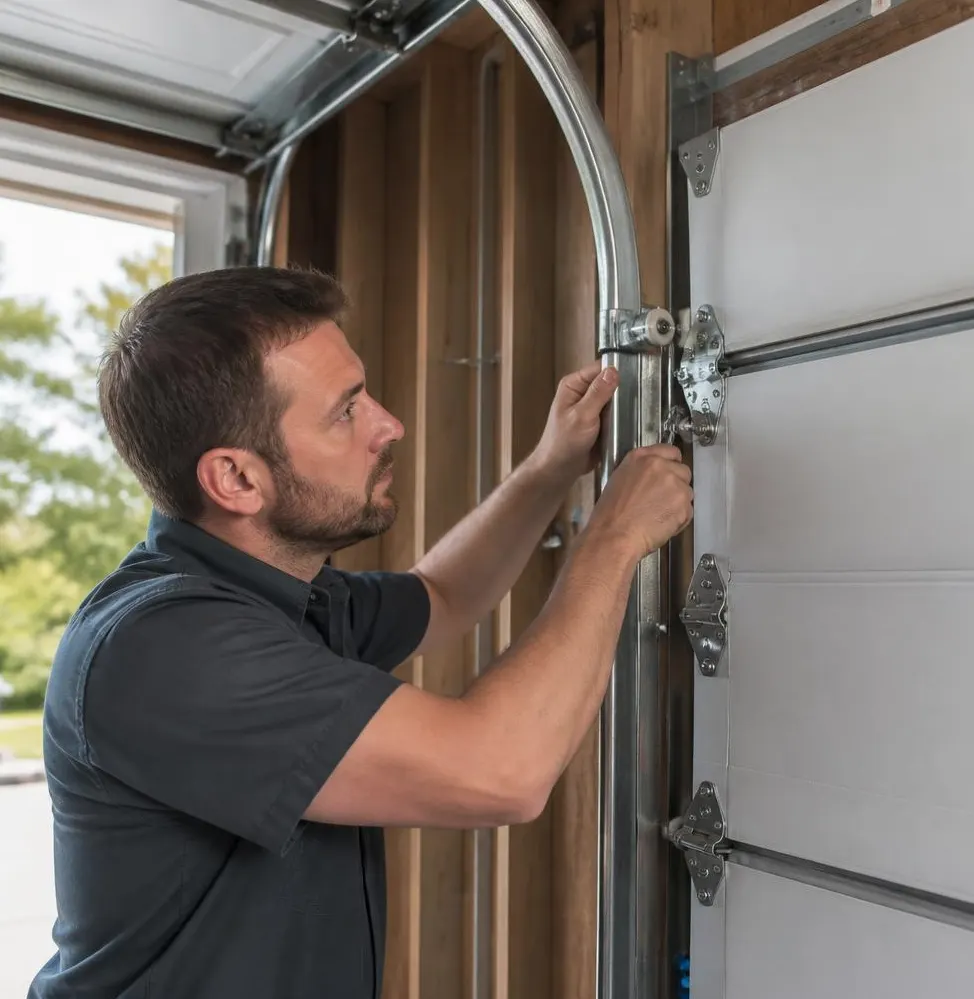
The one rule for winterizing a garage door in this part of Florida is this: lubricate and inspect before the first real cold snap, because humidity and temperature swings do more damage here than freezing temperatures ever will. The exceptions matter, though. If your door already sticks, drags, or groans going up, that's not a winter problem waiting to happen — it's a current problem that cold nights will simply make worse. And if you've had standing water near the track after an afternoon downpour, rust is already working on your hardware whether or not the thermometer drops.
Why a Suwannee County Winter Is Still Hard on a Garage Door
Winters around Wellborn aren't brutal, but they're inconsistent in a way that's hard on metal and wood. A 75-degree afternoon can drop into the 30s overnight, and that swing makes steel springs and tracks expand and contract repeatedly. Add in the humidity that never really leaves North Florida, and you get condensation inside the garage overnight, which turns into surface rust on springs, cables, and hinges by morning. Wood-composite doors and wooden jambs can also swell during humid stretches and then shrink when a cold, dry front moves through, which is when gaps and misalignment show up.
Lubricate the Moving Parts, Not Just the Hinges
Most homeowners oil the hinges and call it done. The parts that actually need attention before winter are the rollers, the torsion spring coils, and the track where the rollers ride. Use a silicone-based or lithium-based garage door lubricant — not WD-40, which displaces moisture short-term but doesn't leave lasting protection. Wipe off old grease and grit first; a greasy roller that's picked up dust from a dirt driveway or lawn clippings will grind instead of glide.
Signs lubrication alone won't fix
- Grinding or scraping that doesn't quiet down after lubricating
- A door that's noticeably louder on cold mornings than warm afternoons
- Visible flaking rust on the spring coils rather than just surface discoloration
Any of those point to wear that lubrication can mask for a little while but won't solve.
Check Weatherstripping Before the Nights Get Colder
The bottom seal and side weatherstripping do more than keep out cold air — they keep out driving rain during storms, and they keep smaller critters from deciding your garage is a good place to spend a cool night. Run a hand along the bottom seal while the door is down; if it's cracked, flattened, or pulling away from the track, cold air and moisture are getting underneath it either way. Replacement weatherstripping is inexpensive and a reasonable DIY job for most homeowners, but if the track itself is bent or the door doesn't sit flush when closed, that's a sign of a bigger alignment issue.
Look Hard at Springs and Cables, Not Just the Door Itself
Rust doesn't just sit on the surface of a spring — it works into the coil and creates weak points you can't see from the floor. Before winter, look (don't touch) for:
- Rust discoloration along the spring coils, especially near the ends
- Fraying or splayed strands on the lift cables near the bottom bracket
- Gaps between spring coils that look uneven when the door is closed
A spring that's already compromised by rust is far more likely to fail on a cold morning, when the metal is stiffer and the door is heavier to lift. This isn't something to test by hand — a spring under tension is dangerous to inspect up close, and it's one of the few garage door issues worth leaving entirely to a technician.
Run a Balance Test
With the opener disconnected (pull the release cord), lift the door halfway by hand. It should stay in place on its own. If it drifts down or shoots up, the spring tension is off, and the opener has been compensating for it, which shortens its lifespan. A door that's out of balance in November often gets noticeably worse by the time real winter weather settles in, because the extra strain on the opener motor compounds with every cold-morning cycle.
Don't Forget the Opener's Backup Power
Late-season storms can still roll through in early winter, and power outages don't check the calendar. If your opener has a battery backup, test it now by unplugging the unit and running the door through a full cycle. If it doesn't have one, it's worth asking about when you're already getting other maintenance done, since manual release during a storm at night isn't something anyone wants to deal with for the first time in the dark.
When to Call Wellborn Garage Door Pro
If your balance test fails, if you're seeing rust on the spring coils, or if the door is noticeably louder or slower than it was a few months ago, it's worth having it looked at before cold mornings make the symptoms worse. Our Garage Door Maintenance & Tune-Up service covers exactly this kind of pre-season check: lubrication, hardware inspection, balance testing, and tightening anything that's worked loose from humidity and temperature swings. If we find spring or cable wear that's past the point of a tune-up, our Garage Door Spring Repair and cable service address it directly, with the tools and training to do it safely.
If you're anywhere from Wellborn out to Live Oak, Lake City, or the surrounding Suwannee County communities, call Wellborn Garage Door Pro before the next cold front rolls through. A half-hour tune-up now is a lot cheaper than an emergency call on a freezing morning when the door won't budge.