
The Morning It Won't Open
It's a rare cold snap morning, the kind Suwannee County gets a handful of times each winter, and you hit the opener button on your way out. Nothing happens, or the door creeps up an inch, groans, and stalls. Maybe you hear a crackling sound right at the bottom seal, like something let go. Maybe the opener motor whines and strains but the door barely moves, or it opens crooked, one side higher than the other. None of this means your garage door is broken for good. It usually means something specific is stiff, swollen, rusted, or out of tune, and cold mornings are just when it shows up.
Symptom: The Door Is Stuck Right at the Floor
If the bottom panel feels glued to the slab and you hear a faint tearing or cracking sound as it breaks free, that's almost always the weatherstripping, not ice. Vinyl and rubber seals that stayed damp from humidity or an afternoon downpour can stiffen overnight when temperatures drop, and if the garage floor stays wet from the same storm, the seal can bond lightly to the concrete. It looks and sounds like it's frozen even when there's no actual ice involved.
Symptom: The Opener Strains But the Door Barely Lifts
This points to added resistance somewhere in the system rather than a seal problem. The motor is doing its normal job against a door that suddenly needs more force to move, which is the next thing a technician checks.
What a Technician Checks, in Order
1. The Weatherstripping and Bottom Seal
This gets checked first because it's the most visible cause and the easiest to confirm. A tech will look for cracking, flattening, or a seal that's swollen from repeated moisture exposure and no longer sitting flush against the floor. The fix is straightforward: replace the bottom seal and side weatherstripping, usually a low-cost repair, and make sure the new seal is rated for the kind of swings between damp heat and occasional cold this area gets.
2. Lubrication on Rollers, Hinges, and Tracks
Garage door lubricant can thicken in cold air, especially if it's an older, cheaper grease that was already gummed up with dust from a humid summer. Combine that with surface rust that forms any time moisture sits on metal hardware, and rollers that normally glide now drag. A technician will clean the tracks, check rollers and hinges for rust pitting, and apply a silicone-based lubricant made for garage door hardware rather than general household oil, which attracts more grit over time.
3. Track Alignment
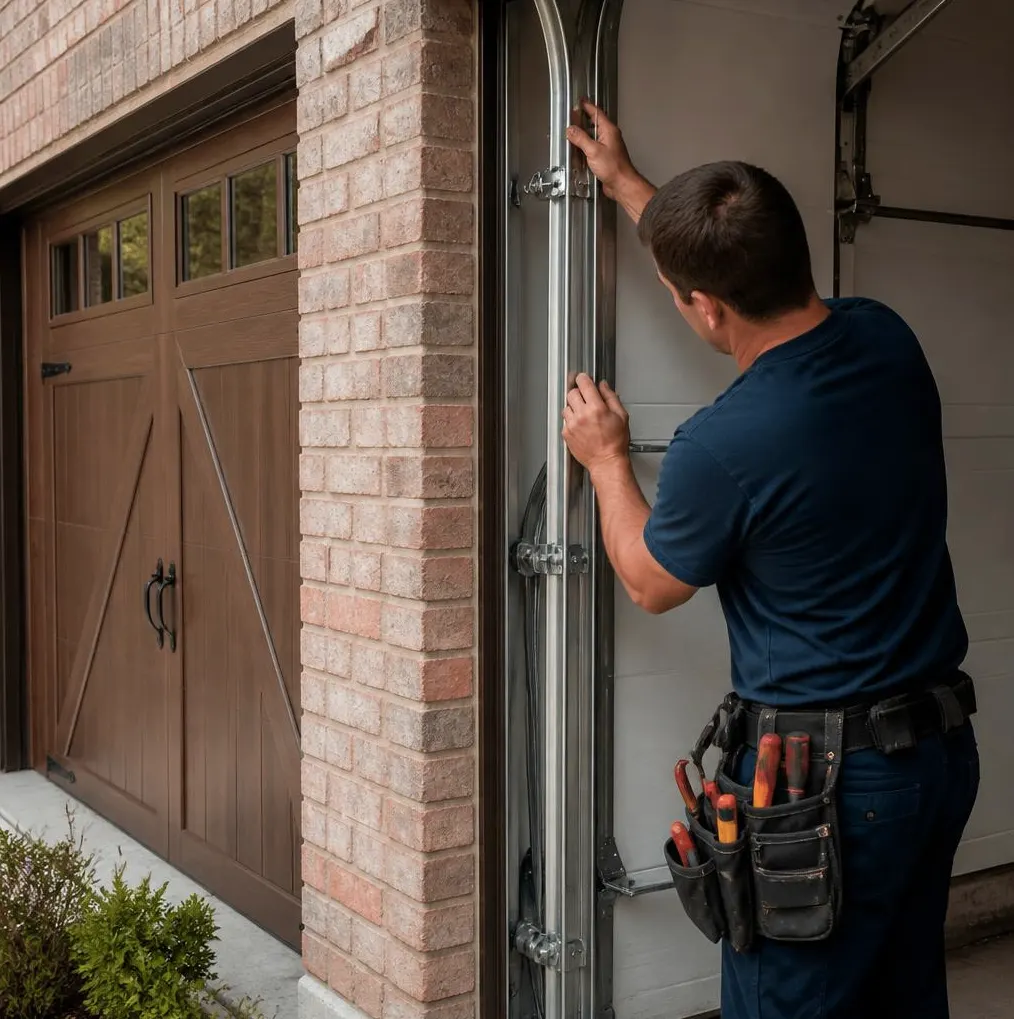
Next comes a check of the tracks themselves. Humidity and heat cause wood-framed openings to expand and contract slightly through the year, and that movement can nudge a track slightly out of alignment. In cold weather, the metal contracts just enough to turn a minor misalignment into a door that binds or runs crooked. Fixing this means loosening the track brackets, adjusting the track back to plumb, and re-tightening, which a trained eye can usually spot faster than trial and error at home.
4. Spring Tension
Torsion and extension springs lose a small amount of tension as metal contracts in cold temperatures, and if a spring was already near the end of its life or slightly undersized for the door, that drop in tension is enough to make the door feel heavy or stall partway. This is also the point where a technician will test the door's balance by disconnecting the opener and moving the door by hand, carefully, since spring tension is not something to diagnose or adjust without the right tools. If the spring is worn or incorrectly wound for the door's weight, a spring repair is the fix, not a lubrication job.
5. Opener Force and Limit Settings
If everything mechanical checks out but the opener still struggles, the force and travel limit settings may need adjusting. Openers are calibrated to a certain amount of resistance, and if the door has gotten slightly heavier or stiffer from any of the issues above, the opener may sense that as an obstruction and reverse or stop early. Recalibrating the limits restores normal operation, but it's really a secondary fix that only matters once the mechanical cause has been addressed.
6. Cables and Hardware Condition
Last on the list, because it's the least common cause of a stuck door, is cable wear. Salt-tinged moisture and general humidity can corrode cable strands over months, and a cable that's starting to fray adds friction and uneven pull exactly when the door is already working harder in the cold. If a tech sees fraying or rust on the cable near the drum, that gets flagged for repair before it becomes a sudden failure.
Why This Matters More in a Place Like Suwannee County
Most of the country deals with actual ice. Here, the bigger factor is the back-and-forth between long stretches of heat and humidity and the occasional sharp cold morning. That cycle is what swells seals, rusts hardware, and stiffens lubricant faster than straightforward cold ever would on its own. A door that works fine in August can still bind in January because of what the humidity did to it the rest of the year.
When to Call Wellborn Garage Door Pro
If your door sticks at the floor, runs crooked, or the opener is straining against resistance that wasn't there last month, it's worth having it looked at before a cold morning turns into a stuck door and a missed appointment. Our team handles everything from a simple Garage Door Maintenance & Tune-Up, which covers lubrication, track alignment, and hardware inspection, to full Garage Door Spring Repair if tension is the real issue. We serve Wellborn, Live Oak, Lake City, and the surrounding Suwannee County area, and we can usually get to a sluggish or stuck door the same week. Call Wellborn Garage Door Pro today to get your door moving smoothly before winter mornings get colder.