
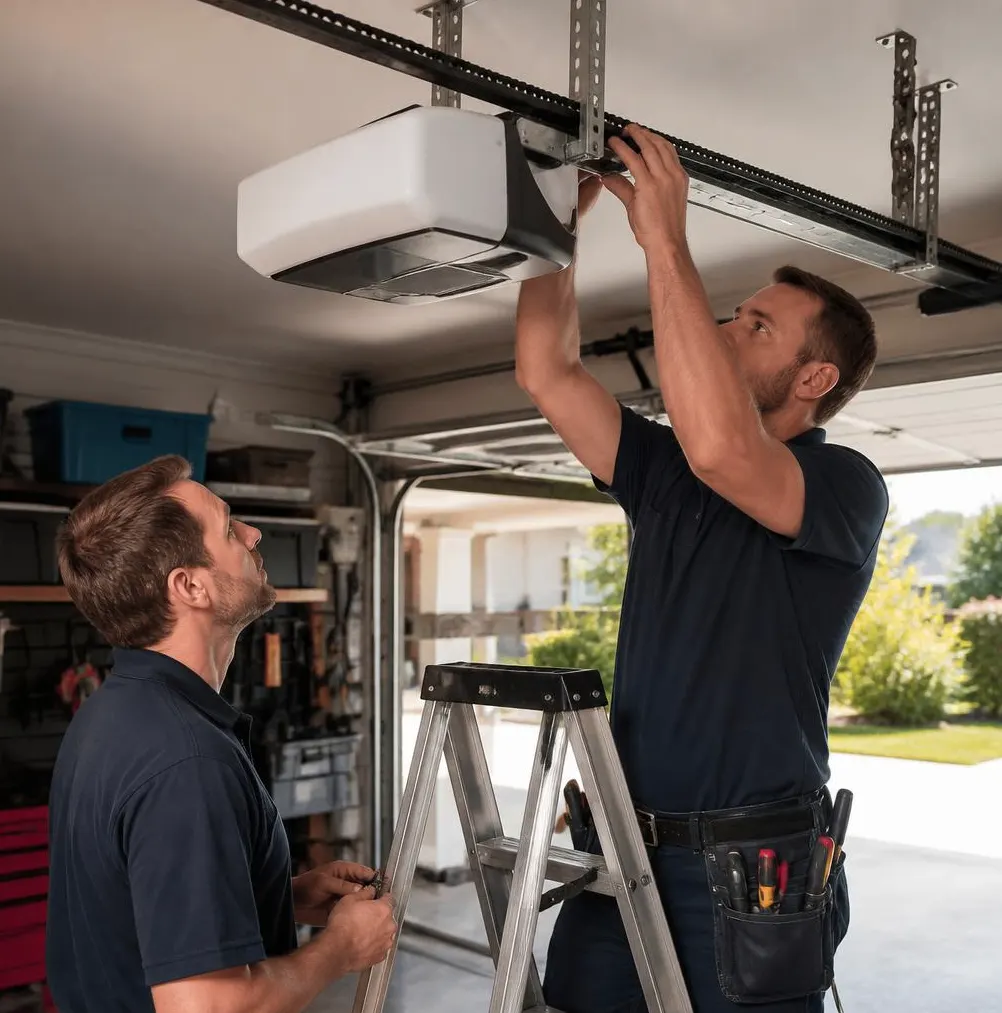
You're standing in the garage, thumb on the wall button, watching the door groan its way up like it's thinking about it. Halfway there it hesitates, jerks, then finishes the climb with a shudder. One of you says, "That's it, it's dying, we need a new one." The other says, "It's fine, it just needs some oil." Neither of you actually knows, so here's the breakdown that settles it.
How Long Each Part Is Actually Supposed to Last
A garage door isn't one thing aging at one speed. It's several parts with completely different lifespans, and the one that fails first is usually the one nobody thinks about.
- Torsion springs are rated in cycles (one cycle = door up and down once), typically 10,000 to 15,000 cycles. For a household opening the door two or three times a day, that works out to roughly 7 to 12 years before a spring snaps or weakens past safe use.
- Garage door openers generally last 10 to 15 years. The motor itself can outlast that, but gears, belts, and logic boards wear down, especially units run hard in heat.
- The door panels themselves — steel, aluminum, or wood — can last 20 to 30 years if the hardware around them is maintained. The panels rarely die of old age on their own; they die of rust, impact damage, or warping that nobody caught early.
- Cables, rollers, and hinges are the quiet wear items. Cables fray slowly over years; nylon rollers crack in heat; hinges loosen from repeated flexing. None of these have a clean "lifespan" — they just get worse until something binds or snaps.
So if the argument is "is the whole door dying," the honest answer is usually no — one component is dying, and it's dragging the rest of the system's performance down with it.
What's Actually Shortening the Lifespan Around Here
North Florida isn't gentle on garage doors, and it's not the heat alone — it's the combination of heat, humidity, and sudden weather swings that does the damage.
- Humidity and moisture swings. Steel doors and tracks rust faster when humidity stays high for months at a time, especially if the garage doesn't get airflow. Wood doors and trim swell during humid stretches and shrink when things dry out, which loosens fasteners and throws panels slightly out of square over time.
- Afternoon storm cycles. Repeated pressure changes from fast-moving storms put extra stress on springs and openers that are already working near the end of their cycle count. A door that's marginal tends to show it right after storm season, not during a calm stretch.
- Heat soak on the opener. A garage that sits in direct sun all afternoon can get hot enough to stress opener motors and electronics, shortening the life of belts and circuit boards faster than a shaded or well-ventilated garage would.
- Lack of lubrication. Humidity actually makes this worse, not better — moisture washes out old lubricant and invites rust on rollers, hinges, and springs that aren't relubricated regularly.
- Skipped balance checks. A door that's out of balance makes the opener do extra work on every single cycle, which quietly burns through motor life years ahead of schedule.
What Actually Extends It
None of this requires replacing anything early. It requires a handful of habits that take a few minutes but add years.
- Lubricate moving metal parts twice a year — springs, hinges, rollers, and the track — with a silicone or lithium-based garage door lubricant, not household oil, which attracts grit.
- Check the balance. Disconnect the opener, lift the door halfway by hand, and let go. It should stay put. If it drifts up or crashes down, the springs are compensating poorly and need adjustment before they fail outright.
- Inspect weatherstripping and the bottom seal before heavy rain season hits again. A cracked seal lets in water that rusts the bottom panel and track from the inside out.
- Tighten hardware. Humidity swings loosen bolts on hinges and tracks over a season. A quarter-turn with a wrench on visibly loose hardware prevents rattling that turns into misalignment.
- Clear the sun and airflow situation. If the opener sits in a hot pocket of the garage, a small vent or fan that moves air through on sunny afternoons reduces heat stress on the motor.
- Don't ignore a slow start. A door that hesitates before moving, or an opener that strains audibly, is usually a spring or roller problem, not an opener problem — fixing the root cause now is cheaper than replacing a motor that burned out compensating for it.
Signs It's a Repair, Not a Replacement
Loud grinding, a door that's slow but still smooth, a remote that's gotten unreliable, or visible rust on hardware (not the panel itself) are almost always repair situations. Full replacement makes more sense when the panels are physically warped, the door no longer meets current wind-load expectations for storm season, or repair costs are stacking up on a door that's already past 20-plus years old.
When to Call Wellborn Garage Door Pro
If the door is hesitating, the opener sounds like it's working too hard, or you're genuinely not sure whether you're looking at a $150 fix or a $1,500 one, that's the moment to get it looked at rather than guess. We handle Garage Door Spring Repair for doors that are clearly out of balance or making that telltale grinding hesitation, and we run full Garage Door Maintenance & Tune-Up visits that catch rust, loose hardware, and worn rollers before they turn into a 6 a.m. dead-battery-in-the-rain situation. We'll tell you straight whether it's a quick fix or genuinely time to talk replacement — no upsell, just the honest read.
If your garage door in Wellborn, Live Oak, Lake City, or anywhere nearby has you and your spouse debating its future, give Wellborn Garage Door Pro a call — we'll settle it for you, fast.